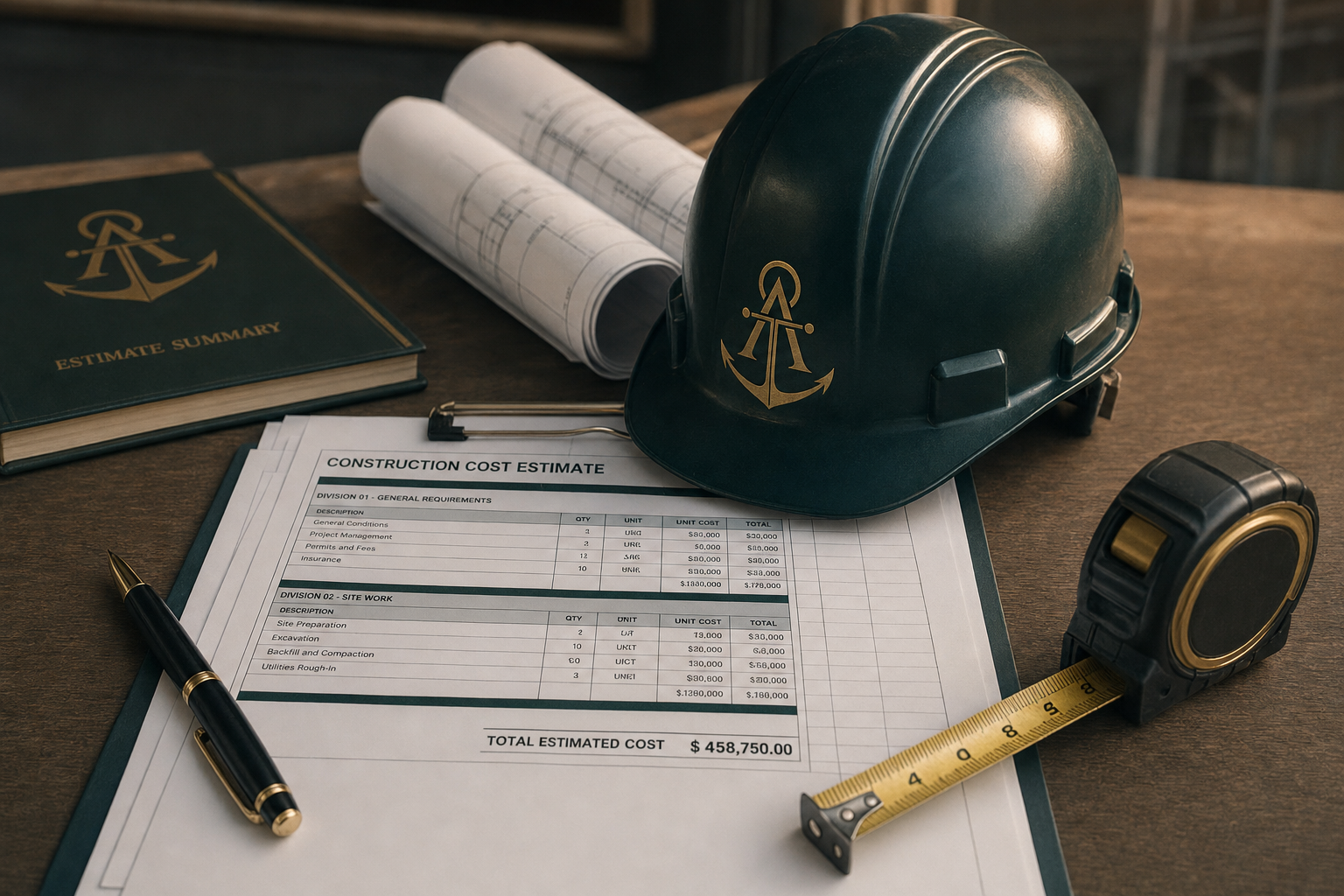
Construction project advisory services empower owners to maintain independence by providing dedicated advocacy and expert oversight separate from the general contractor's building operations. These specialists manage cost, schedule, and risk to ensure project decisions align strictly with the owner’s objectives; this creates a vital system of checks and balances throughout the development process.
In the high stakes world of multifamily and student housing development, project owners often find themselves trapped between a contractor’s execution schedule and their own fiduciary responsibilities. Traditional contracting models inherently prioritize the speed and convenience of the builder, which can frequently lead to a lack of transparency or a misalignment of interests. This information gap leaves owners vulnerable to costly change orders and compromised quality that only surface after the keys are handed over. True project success requires a distinct layer of strategic oversight that advocates solely for the asset holder. In this article, we examine the fundamental differences between construction advisory services and traditional contracting. You will learn how independent representation maintains project integrity, why this model is critical for large scale portfolios, and how to identify the hidden costs of proceeding without an expert advocate on your side of the table.
The Inherent Tension Between Building and Oversight
Construction projects operate within a fundamental misalignment of incentives that owners often overlook until the first change order arrives. A General Contractor (GC) is primarily driven by execution speed, labor efficiency, and profit margin. Their success is measured by how quickly they can close out a project while maintaining their internal spread. In contrast, the owner is focused on long term asset performance, operational viability, and strict budget discipline.
This tension often leaves the owner as the only party without a specialized technical advocate. Integrating construction project advisory services resolves this by placing a non-conflicted voice at the table; one that understands the mechanics of building but answers only to the owner’s ROI. These services act as a bridge, ensuring that field decisions align with the financial and operational objectives of the project rather than just the contractor's schedule.
Anchorline Holdings & Advisory occupies a distinct position in this landscape. By providing professional advisory services on a national scale while maintaining active residential and multifamily construction operations in Illinois and Colorado, we maintain a 360 degree view of project friction. We recognize the pressure points where contractor profit and owner value collide. This dual perspective allows us to anticipate conflicts before they manifest as costly delays, ensuring that project coordination remains focused on the asset's total lifecycle. Owners looking to stabilize their project oversight can contact Anchorline to discuss specific portfolio needs.
What Are Construction Project Advisory Services?
At its core, construction project advisory services function as a technical extension of the ownership team. While a General Contractor (GC) manages the physical job site, executes subcontracts, and oversees manual labor, an advisor focuses on the strategic integrity of the entire project. Often referred to as an Owner’s Representative, this role is not defined by the management of trades, but by the management of the project’s workflow, budget, and quality benchmarks.
The functional distinction lies in the division of responsibility. The contractor is responsible for the "how" and the "when," focusing on the mechanics of building and the timeline of completion. The advisor, conversely, governs the "why" and the "how much." This involves rigorous professional advisory services that scrutinize rehabilitation planning to ensure every capital expenditure correlates with the owner's long term asset strategy.
Professional advisory tasks extend far beyond basic project management. They include:
Vendor Oversight: Monitoring third-party performance to ensure contract compliance and quality control.
Process Improvement: Identifying bottlenecks in the construction sequence to enhance operational efficiency.
Rehabilitation Planning: Analyzing the scope of work to ensure it aligns with the expected lifecycle of the property.
Independent Budget Tracking: Verifying that progress payments and change orders reflect actual field conditions rather than contractor projections.
By decoupling oversight from execution, owners gain a transparent, non-conflicted view of their project’s health. For those managing complex portfolios, the ability to contact Anchorline for specialized coordination ensures that the technical complexities of a build do not overshadow the financial performance of the property.
The Traditional Contractor Model: Execution Over Advocacy
A traditional General Contractor operates under a contract designed to insulate their business from the unpredictability of the field. This structure is built for execution, not advocacy. When an unforeseen site condition emerges, the contractor’s primary lever is the change order. This document serves to re-balance the GC’s risk, ensuring that additional labor or materials do not erode their anticipated profit margin. While this is a standard business practice, it often places the owner in a defensive position where they must approve costs under the pressure of a stalled timeline.
Consider a multifamily rehabilitation where a crew discovers outdated electrical wiring during the demolition phase of a kitchen upgrade. A traditional GC will likely issue a high-priority change order to replace the entire run to maintain their schedule and limit their liability. Without independent oversight, the owner is often forced to accept the quote at face value. Conversely, a firm providing construction project advisory services analyzes the situation with technical skepticism. The advisor asks if a partial replacement meets code, compares the contractor’s quote against regional market rates, and evaluates if the expense aligns with the asset's long term capital plan.
By introducing professional advisory services into the workflow, the owner gains a gatekeeper who validates every technical pivot. The advisor’s goal is to find the most cost-effective solution that preserves the project’s ROI rather than simply selecting the fastest path to completion. For owners looking to implement this level of scrutiny on their next build, the ability to contact Anchorline ensures that execution never happens at the expense of advocacy.
Why Independence Matters in Student Housing and Multifamily Portfolios
In student housing and multifamily portfolios, the physical structure is inextricably linked to the operational calendar. This is where the gap between execution and advocacy becomes most apparent. A General Contractor is primarily concerned with achieving substantial completion on the agreed upon date. However, for a property operator, completion is not the only metric that matters. An advisor viewing the project through the lens of professional advisory services prioritizes how the construction sequence impacts leasing performance and portfolio optimization.
During a high-volume student housing turn, every day of delay directly correlates to lost occupancy that may not be recovered for an entire academic year. While a GC focuses on finishing units in the most efficient sequence for their labor force, an advisor conducts a comprehensive workflow analysis to align construction with the property’s leasing goals. This might involve prioritizing model units early in the cycle to facilitate pre-leasing or staging renovations in a way that minimizes disruption to existing residents, thereby protecting renewal rates. This independent perspective ensures that the construction schedule serves the asset's occupancy requirements rather than the contractor's internal logistics.
Independence is critical because it allows the advisor to challenge a contractor’s schedule if it threatens the asset's bottom line. For instance, a contractor might prefer to renovate all common area amenities simultaneously to save on mobilization costs. An advisor with operational experience recognizes that shutting down a fitness center or clubhouse during peak leasing season is a strategic failure that outweighs the contractor’s minor savings. By integrating sophisticated operations analysis with field-level oversight, construction project advisory services ensure that the rehabilitation process supports the property’s revenue objectives. Owners who need to synchronize their construction timelines with complex operational cycles should contact Anchorline to discuss a tailored execution strategy for their portfolio.
The Hidden Costs of Not Having an Multifamily property financial due diligence requires a rigorous audit of historical income and expenses by cross-referencing rent rolls, tax returns, and bank statements. Investors must verify the accuracy of the net operating income and evaluate market benchmarks to ensure the deal's projected returns are realistic; this process helps identify hidden liabilities before closing.
Many investors enter a multifamily deal with a pro forma that looks perfect on paper, only to discover post-closing that the actual net operating income is cannibalized by hidden expenses or inflated occupancy figures. This disconnect between a seller’s marketing package and the operational reality is where most acquisitions fail before they even begin. At Anchorline, we understand that financial due diligence is not merely a box to check; it is a rigorous interrogation of a property’s historical performance and future viability. In this guide, we will examine how to decode T-12 statements and rent rolls, verify true economic occupancy, and apply realistic benchmarks like the 50 percent rule. You will also learn how to factor in renovation costs and identify the financial red flags that signal a deal worth walking away from.
Why Financial Due Diligence is the Foundation of a Sound Acquisition
Multifamily property financial due diligence serves as the primary risk mitigation process in any acquisition. While physical inspections reveal the state of the brick and mortar, the numbers provide the only true diagnostic of a property’s operational health. A leaking roof is a tangible problem with a fixed cost; however, a leaking bottom line caused by systemic mismanagement or inflated income projections can be far more damaging to an investor's long term returns.
Success in this space requires a "trust but verify" mindset. A seller’s pro forma typically illustrates a best case scenario, often assuming perfect collections and minimal vacancy. Investors must look past these optimistic projections to find the reality of the asset. At Anchorline Holdings & Advisory, we bridge the gap between physical reality and financial reporting. Our team combines extensive residential construction experience with more than a decade of leadership in multifamily and student housing operations.
For Illinois investors and national portfolio operators alike, our professional advisory services provide a forensic look at the data. We analyze how construction needs intersect with operational workflows, ensuring that today’s low repair costs are not simply masking massive capital expenditures required tomorrow. If you are ready to move beyond the marketing flyer, contact Anchorline Holdings & Advisory to ensure your next acquisition is built on a verified financial foundation.
The T-12 and Rent Roll: Decoding the Primary Financial Documents
A successful multifamily property financial due diligence process begins with the Trailing 12-Month (T-12) statement and the current Rent Roll. These documents represent the actual operational history of the asset, providing a necessary counterpoint to the future looking pro forma. The T-12 offers a monthly breakdown of income and expenses, allowing you to identify trends that a simple annual summary would mask.
When reviewing the T-12, focus on seasonality and expenditure spikes. In Illinois markets, utility costs should fluctuate significantly between peak heating months and milder shoulder seasons; flat utility billing across twelve months suggests either estimated billing or an incomplete data set. Similarly, examine the repairs and maintenance categories. A sudden drop in maintenance spending during the final three months of the T-12 often indicates that a seller is intentionally deferring work to artificially inflate Net Operating Income (NOI) before a sale. Conversely, irregular spikes may reveal recurring mechanical failures that require capital intensive solutions rather than simple patches.
The Rent Roll functions as the property's current inventory. Beyond confirming the number of occupied units, it is essential to analyze the gap between "market rent" and "collected rent." This delta, often referred to as loss to lease, represents immediate upside if the property is brought to current market standards. Pay close attention to lease expiration dates to ensure you are not walking into a "lease cliff," where a large percentage of tenants vacate simultaneously. You must also verify that security deposit balances on the rent roll match the actual cash held in escrow accounts.
Look specifically for "stale" tenants who have remained on month to month leases for several years. While this often signals management that has checked out, it also represents a prime opportunity. These units typically have significant room for rent increases or are candidates for the professional advisory services we provide to optimize portfolio performance through strategic renovations and updated leasing structures.
Moving Beyond the Spreadsheet: Verifying Economic Occupancy
A common pitfall in multifamily property financial due diligence is conflating physical occupancy with economic occupancy. Physical occupancy simply tracks units with active leases, but it fails to account for the reality of cash flow. Economic occupancy measures the actual revenue collected against the gross potential rent. To verify these figures, you must cross-reference the rent roll with at least six months of bank statements and merchant processing reports. This verification step ensures that the income reported on the T-12 actually reached the bank and was not offset by unrecorded credits or non-cash adjustments.
Lease concessions are a primary driver of the gap between physical and economic health. A property may appear 95 percent occupied with high face rents, yet the owner might be offering one month free or waived move in fees to lure tenants. While these concessions keep the units full, they artificially inflate the market rent reported on the rent roll while eroding the net operating income. Sellers occasionally hide these incentives within various expense categories or fail to report them as a contra revenue line item, making the asset appear more profitable than it truly is.
A deep dive into the delinquency report is also essential for a complete diagnostic. Consistent late payments often signal deeper operational issues or a tenant base that cannot sustain current rent levels. By reviewing the aged receivables, you can determine if the reported income is stable or if the property is carrying a heavy burden of bad debt that will eventually require eviction and turn costs. Our professional advisory services help investors identify these discrepancies before capital is committed. If you need a forensic look at a potential acquisition, contact Anchorline Holdings & Advisory to review the operational integrity of your next deal.
Standard Real Estate Rules of Thumb: 50 Percent Rule and Beyond
In the initial screening phase, investors often lean on standard real estate heuristics to determine if a deal warrants deeper investigation. The 50 Percent Rule is the most prominent of these, suggesting that operating expenses, including taxes, insurance, and utilities, will typically consume half of a property's gross income. While this provides a useful baseline for a quick calculation, it is a blunt instrument. In Illinois, where property tax assessments can vary wildly between counties, relying on a national average often leads to a significant underestimation of the actual expense load.
Similarly, the 1 Percent and 2 Percent rules provide a metric for rent relative to purchase price, while the 7 Percent rule sets a target for annual return on investment. These benchmarks help filter out overpriced assets quickly, but they are no substitute for a thorough multifamily property financial due diligence process. A property that meets the 1 Percent rule might still be a poor investment if the deferred maintenance requires capital infusions that the current cash flow cannot support.
Local volatility is the primary reason these rules often fail. For portfolio operators in Illinois, the intersection of rising insurance premiums and aggressive tax reassessments means that expenses often exceed the 50 percent threshold. Our professional advisory services move beyond these generalities to provide asset specific analysis based on real world operational data. If you are evaluating an acquisition that looks good on a spreadsheet but lacks a granular expense audit, contact Anchorline Holdings & Advisory to verify if the standard rules of thumb actually hold up against the property's specific market conditions.
The Construction and Advisory Angle: Factoring in Renovation and Property Turn Costs
A financial audit yields incomplete data if it is not reconciled with a thorough physical property condition assessment. During the multifamily property financial due diligence process, investors frequently encounter Trailing 12-Month statements that show suspiciously low repairs and maintenance expenses. While a seller may frame this as operational efficiency, it is often a red flag for deferred maintenance. By suppressing routine upkeep, a seller artificially inflates the Net Operating Income to secure a higher valuation; however, this strategy merely converts today's operating expenses into tomorrow’s massive, unbudgeted capital expenditures.
Our firm’s background in student housing turns and residential rehabs across Central Illinois and Colorado provides a unique perspective on these costs. In student housing and high-density multifamily assets, the "turn" is the most critical financial event of the year. Sellers often provide pro forma turn costs that are divorced from current labor and material realities. If a seller claims a per-unit turn cost of $600 while market rates for paint, flooring, and basic hardware updates exceed $1,800, your projected cash flow will vanish during the first vacancy cycle. We help investors identify these discrepancies by comparing historical P&L line items against actual construction market data.
Operational consulting adds a final layer of protection by identifying where process improvements can reduce vacancy loss. Our professional advisory services look beyond the cost of the materials to evaluate the workflow of the turn itself. Inefficient vendor oversight and poor construction coordination can lead to units sitting vacant far longer than necessary, eroding the property's economic occupancy. To ensure your renovation budget and operational strategy are grounded in reality, contact Anchorline Holdings & Advisory for a comprehensive review of your acquisition’s physical and financial health.
Identifying Financial Red Flags Before Closing the Deal
Identifying these anomalies is the final hurdle of multifamily property financial due diligence. Investors must scrutinize the T-12 for specific irregularities that suggest a seller is grooming the asset for a higher valuation. Common red flags include:
A sudden drop in contract services or utilities in the final ninety days of the T-12, often indicating that bills are being withheld or essential services have been paused to inflate the Net Operating Income.
"Other Income" categories populated by non-recurring items, such as insurance claim payouts or one-time damage fees, being represented as stable miscellaneous revenue.
A rent roll showing a high volume of new leases signed within sixty days of the listing, which often indicates "stuffing" the property with unqualified tenants to reach a target occupancy percentage.
In Illinois, property taxes represent a significant variable risk. Investors should never rely on the seller's historical tax bill. Instead, verify the local township or county assessor’s records and model a reassessment based on the new purchase price. A post-sale reassessment in markets like Cook County or Central Illinois can immediately decrease projected returns if not properly escrowed. Through our professional advisory services, we assist in modeling these tax scenarios to protect your ROI. If you have concerns about the data you are seeing, contact Anchorline Holdings & Advisory for a detailed document audit before you sign.
Successful multifamily investing starts with a clear understanding of the financial data behind every deal. By thoroughly analyzing income statements and rent rolls, you can uncover hidden risks or opportunities that others might miss. However, navigating these complex spreadsheets requires a meticulous eye for detail. If you want expert help evaluating your next acquisition, we invite you to contact our team. At Anchorline Holdings & Advisory, we provide the guidance needed to turn raw data into confident investment decisions.

Investment in professional advisory services is frequently viewed as an additional line item, yet the absence of this role often results in a quiet erosion of capital. The common industry debate regarding construction advisory vs general contractor owner representation cost ignores a critical reality: a contractor acting as their own oversight is fundamentally incentivized to protect their own margin. While an independent advisor typically charges a fee ranging from 1 to 5 percent of the total project cost, the resulting savings often exceed 10 percent of the budget. These savings are realized through the rigorous prevention of inflated change orders and independent budget tracking that validates every dollar spent.
Financial recapturing occurs through several high impact mechanisms:
Bid Leveling: Standardizing contractor quotes to ensure owners are comparing true "apples to apples" figures rather than accepting a low bid that hides future change orders.
Material Substitutions: Identifying functionally equivalent materials that meet design standards while reducing procurement costs.
Schedule Compression: Eliminating unnecessary delays in the construction sequence, which reduces the carrying costs of the asset and accelerates the time to market.
By serving as a technical firewall, an advisor identifies where a contractor might be over-specifying labor or materials to pad their contingency. For owners seeking to maintain the financial integrity of their projects, the decision to contact Anchorline for construction project advisory services shifts the project dynamic from reactive payment to proactive cost management.
Frequently Asked Questions About Construction Advisory
Clarifying the nuances of project oversight helps owners identify where gaps exist in their current management structure. A common point of confusion is whether a general contractor can also serve as the owner's representative. While some firms offer both, doing so creates an inherent conflict of interest. An effective representative must be able to audit the contractor's performance, schedule adherence, and billing without bias; a task that is impossible when the auditor and the builder are the same entity.
Another frequently encountered term is PMC, or Project Management Consultant. In the context of professional advisory services, a PMC acts as an external expert who manages the high level coordination of a project without performing the physical labor. This role is often synonymous with an advisor but typically emphasizes the administrative and planning phases of a development over the physical site mechanics.
Similarly, owners often ask how an advisor differs from a Construction Manager (CM). A CM typically holds the subcontracts and is responsible for the direct delivery of the project, often assuming financial risk through a Guaranteed Maximum Price (GMP). Conversely, a provider of construction project advisory services holds no subcontracts and assumes no direct construction risk. This separation allows the advisor to remain a neutral advocate, focused solely on the owner's financial and operational interests. For those needing clarity on how these roles function within a specific portfolio, it is best to contact Anchorline to evaluate which structure fits the project's scale.
Choosing the Right Partner for Your Portfolio
Selecting a partner for construction project advisory services requires vetting for a rare combination of skills. You must find a firm that pairs practical, hands-on construction experience with the capacity for sophisticated operations analysis. This dual competency ensures your advisor can identify technical field errors while simultaneously calculating their impact on your asset's long term ROI.
It is vital to recognize that Anchorline Holdings & Advisory does not function as a real estate brokerage or a property management company. We are a specialized partner dedicated to project coordination and portfolio performance. By focusing strictly on professional advisory services, we provide the technical advocacy required to protect your capital throughout the lifecycle of a build. To discuss a tailored strategy for your holdings, you may contact Anchorline today.
Choosing a construction advisory model empowers you to retain control over your project while ensuring that every decision aligns with your long term goals. By separating the oversight from the physical labor, you maintain the independence necessary to protect your investment. If you feel that you would benefit from expert support to navigate these complex processes, our team can provide the high level guidance you need. You can learn more about our specific approach to Advisory and how it helps owners achieve better project outcomes without sacrificing their autonomy.